Securing a residential structure requires an active pest control service in Orlando configured specifically for high-humidity subtropical microclimates. Invasive pests such as Formosan subterranean termites, American cockroaches, and roof rats exploit building envelopes throughout Central Florida year-round.
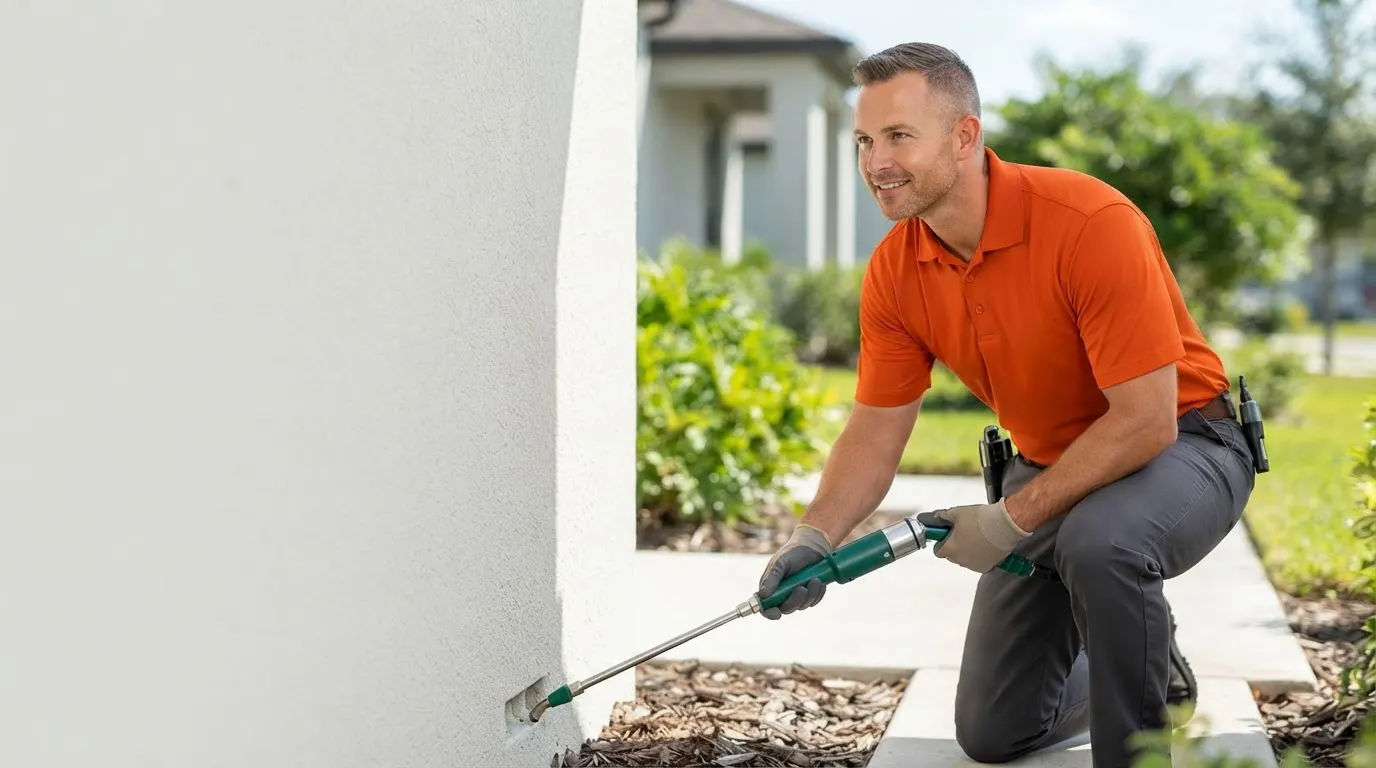
Pest control service in Orlando is an integrated pest management and chemical barrier application system designed to eliminate structural wood-destroying organisms, invasive insects, and rodents from residential and commercial structures across Orange County.
Every service reflects the same meticulous attention to detail, whether it's a single job or a larger pest control service project across Orlando.
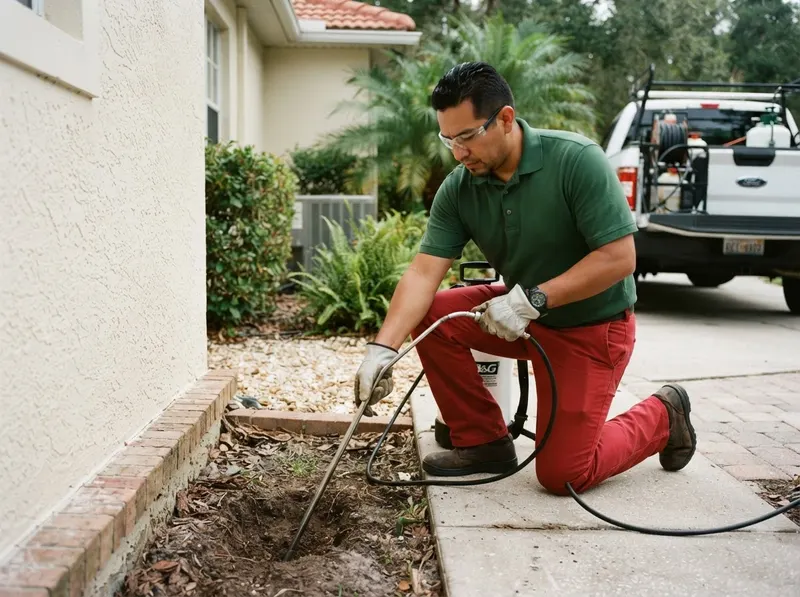
Liquid non-repellent termiticide barrier trenching and targeted bait stations engineered to halt Eastern subterranean and Formosan colonies penetrating concrete slab expansion joints and plumbing collars. Technicians excavate continuous trenches 6 inches wide and 6 inches deep around foundation stem walls, applying termiticide solutions at an application rate of 4 gallons per 10 linear feet. Monolithic slab penetrations, masonry voids, and expansion joints under garage aprons receive vertical rod injections to create an uninterrupted lethal boundary. Formosan colonies nesting within moist soil profiles transfer the slow-acting non-repellent active ingredient throughout their underground galleries, achieving complete colony collapse within 90 days without driving worker termites into untreated interior wall studs.
Get a quote →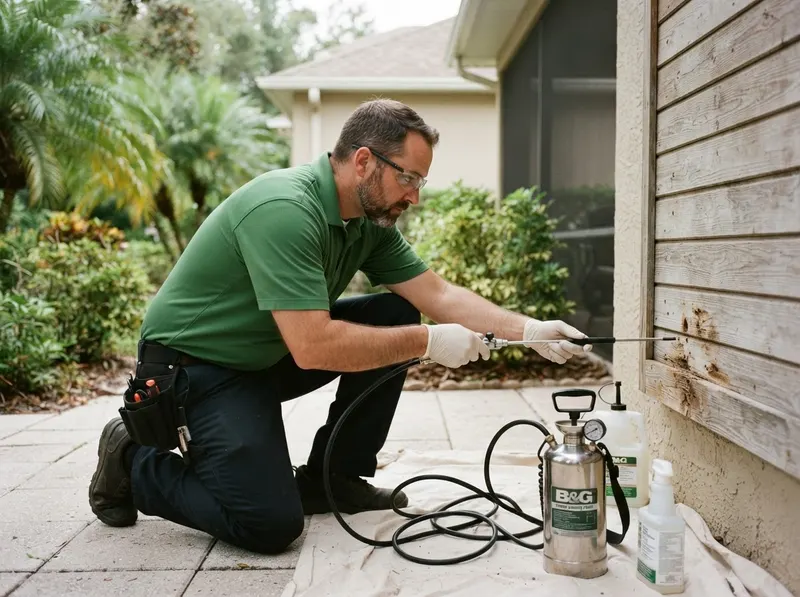
Targeted structural wood injection using expanding non-repellent foam and borate preservatives to eradicate localized drywood colonies within roof trusses, fascia boards, and exterior door framing. Structural inspectors use acoustic sensors and thermal scanning to pinpoint kick-out holes where drywood termites eject fecal pellets from timber galleries. Technicians drill precision 1/8-inch access holes directly into infested wood members and inject high-expansion borate foam under low pressure. The foam fills gallery voids, penetrates structural cellulose fibers, and dries to eliminate active nymph populations. This localized injection prevents the expense, utility disconnections, and chemical displacement required by full-structure sulfuryl fluoride fumigation when wood damage remains isolated.
Get a quote →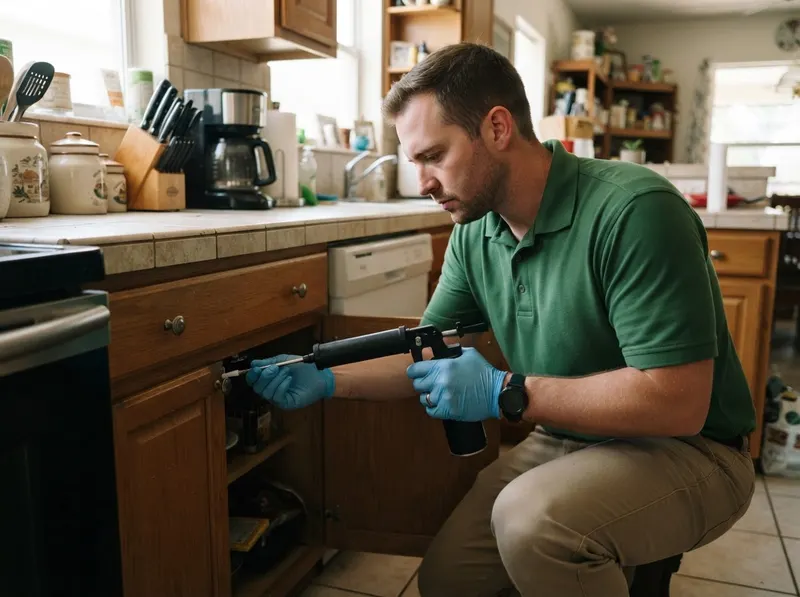
Specialized multi-stage interior remediation utilizing high-potency gel baits, non-repellent residual liquids, and insect growth regulators to disrupt egg production cycles inside warm kitchen and bathroom motor compartments. Technicians inspect behind refrigerators, beneath dishwashers, inside range control panels, and across hollow cabinet voids where high heat and moisture concentrate breeding clusters. Micro-dot gel bait placements containing abamectin or indoxacarb target foraging nymphs, while insect growth regulators inhibit chitin synthesis to prevent juveniles from reaching reproductive adulthood. Wall voids receive dry diatomaceous earth or borate dust injections around plumbing stub-outs, eradicating deep nesting pockets without contaminating food preparation surfaces or producing airborne chemical odors.
Get a quote →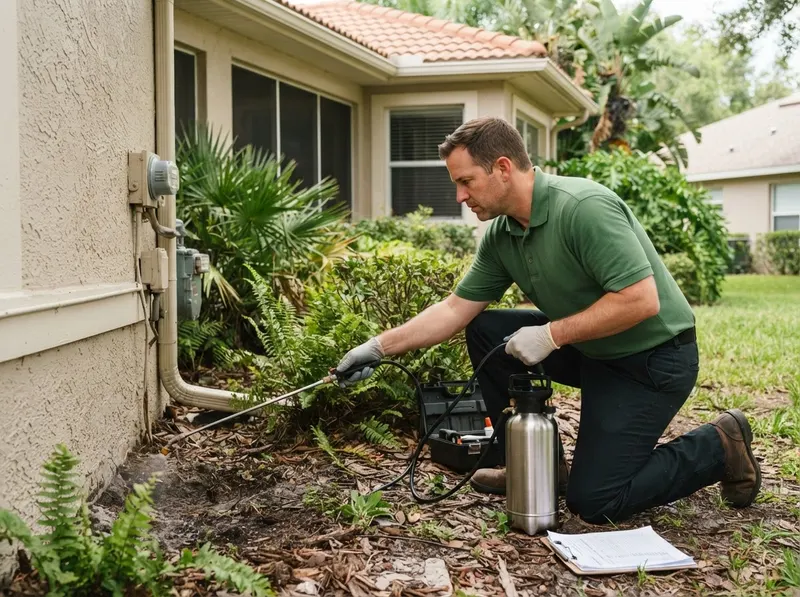
Micro-encapsulated liquid perimeter barriers and water-resistant bait granules applied 3 feet up the exterior foundation and 5 feet outward to block American cockroaches, smoky brown roaches, and ghost ants. The micro-encapsulated formulation binds directly to masonry, stucco, and mulch beds, resisting degradation caused by extreme midday ultra-violet rays and daily convective downpours. Technicians target exterior pipe chases, weep screeds, window trim frames, and threshold gaps where palmetto bugs seek entry during rainy summer cycles. Specialized granular insect baits distributed along ornamental planting beds suppress outdoor nesting reservoirs, preventing perimeter insects from trailing across patio slabs and invading interior living spaces.
Get a quote →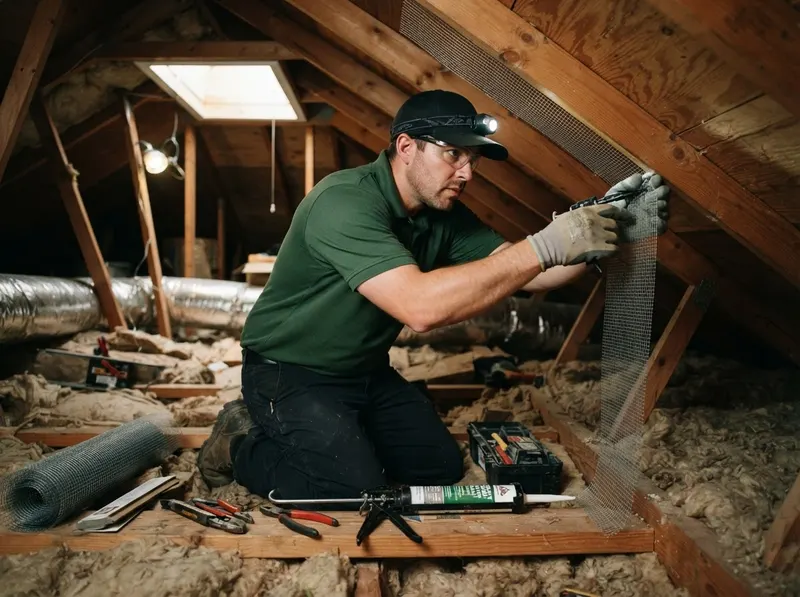
Mechanical entry-point sealing using heavy-gauge welded wire mesh and structural sealants across roof returns, barrel tile gaps, and soffit transitions to permanently bar roof rats and squirrels. Field technicians inspect the entire roof perimeter, targeting builder gaps where roof decking meets fascia boards, unsealed attic vent louvers, and AC line-set wall penetrations. Installers bend and mechanically fasten 1/4-inch or 1/2-inch 16-gauge galvanized steel hardware cloth over all structural voids larger than a quarter-inch. Roof junctions and rake edges receive non-toxic elastomeric sealant reinforcements that withstand roof thermal expansion while blocking rodent gnawing pathways, eliminating entry without relying on temporary exterior bait boxes.
Get a quote →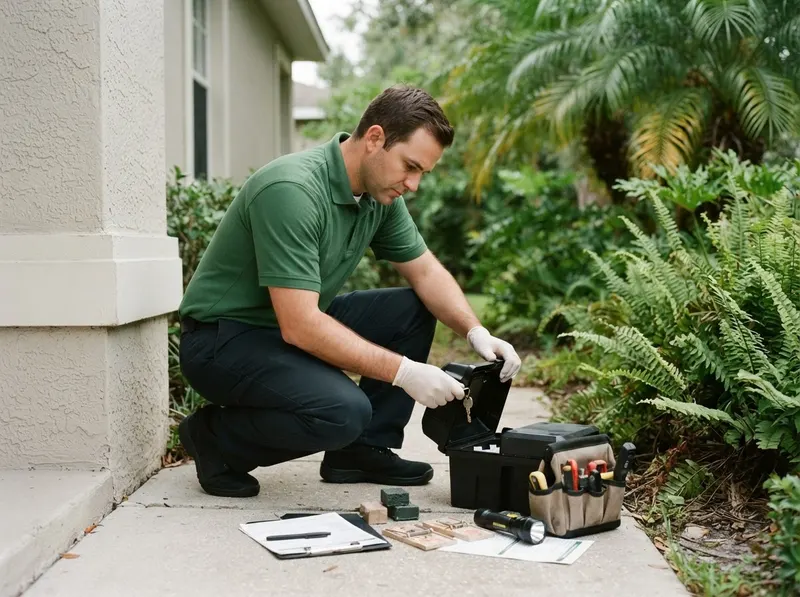
Mechanical interior snap-trapping runs inside ceiling cavities, followed by biological enzyme de-contamination and pheromone trail neutralization to eliminate attic airborne pathogen vectors. Technicians establish commercial-grade wooden and composite snap traps along recognized rodent runways and structural joists, monitoring trap lines over consecutive 48-hour check cycles until zero rodent captures confirm complete structural extraction. Post-removal protocols deploy ULV atomizing foggers loaded with multi-surface enzymatic sanitizers across blown cellulose and fiberglass insulation. The biological wash dissolves rodent urine deposits, neutralizes feces pheromone markers that lure outside rodents, and deodorizes ceiling spaces without leaving harsh synthetic perfume scents.
Get a quote →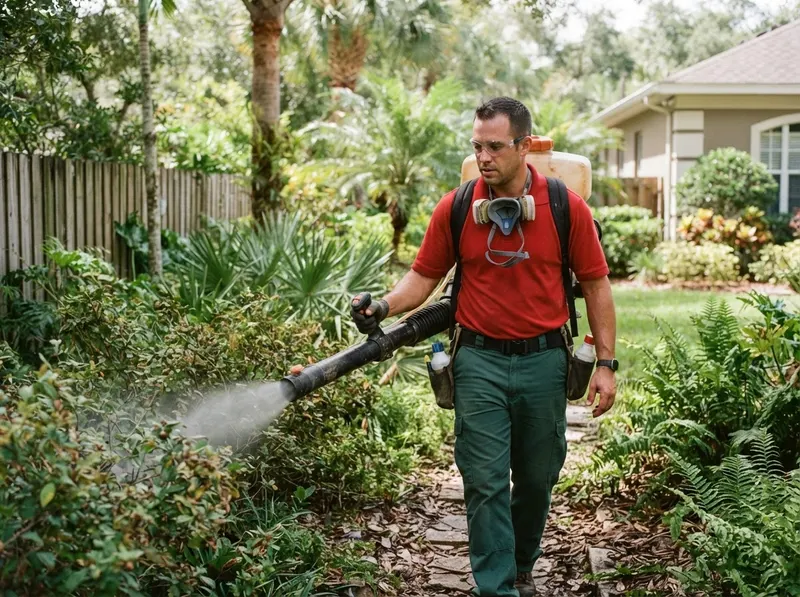
Low-volume botanical and residual misting targeted directly at dense under-leaf foliage, shaded landscape pockets, and standing water collection points to suppress breeding adult mosquito clusters. Treatments deploy commercial backpack mist blowers delivering calibrated droplets that adhere underneath broadleaf ornamentals, bamboo stands, palm canopies, and dense hedges where adult Aedes and Culex mosquitoes rest during daylight hours. Biological larvicide granules containing Bacillus thuringiensis israelensis (BTI) are placed directly into exterior drainage swales, birdbaths, landscape fountain basins, and bromeliad cups to prevent mosquito pupation, stopping the vector cycle before flying adults emerge.
Get a quote →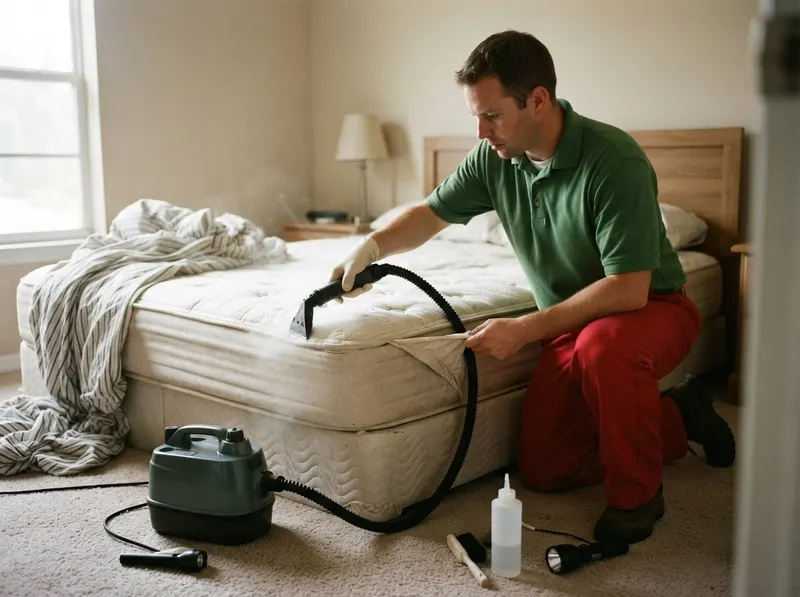
Precision mattress seam, baseboard, and bed frame cleanout applying contact knockdown agents, residual desiccants, and residual crack-and-crevice compounds to eliminate all life stages. Technicians conduct detailed physical inspections of headboards, nightstands, carpet perimeters, electrical switchplates, and upholstered furniture. Infested furniture seams and structural cracks receive high-temperature localized steam treatments to immediately neutralize heat-sensitive bed bug eggs and nymphs. Residual silica aerogel dusts and micro-encapsulated liquid insecticides are deployed inside baseboard junctures and wall voids, establishing a lethal boundary that eradicates wandering adults for weeks following the primary cleanout.
Get a quote →You get a firm, itemized quote for your pest control service before any work begins, no surprises, no pressure.
Careful prep, tidy work, and a full cleanup when we are done. We treat your home and belongings like our own.
The same trusted, background-checked team from the first call to the final check.
Selecting appropriate pest defense depends entirely on the biological vector, the structural access point, and the moisture profile of the property. If you observe pinhead-sized mud tubes running along monolithic concrete stem walls or bubbling drywall paint, choose a non-repellent liquid soil barrier and baiting program rather than topical perimeter sprays. Liquid termiticides bond with sand soils to eradicate subterranean colonies through transfer effects, whereas basic surface sprays degrade within weeks under intense ultra-violet exposure and daily afternoon rainfall.
If you spot juvenile German cockroaches behind kitchen appliances or around electrical outlet boxes, select an interior crack-and-crevice bait cleanout paired with insect growth regulators instead of broad aerosol foggers. Foggers disperse airborne particles across exposed living surfaces and push roach populations deeper into inaccessible drywall voids without neutralizing egg capsules. If scurrying noises occur inside drywall or ceiling joists after midnight, choose mechanical rodent exclusion combined with exterior one-way door trapping instead of indoor anticoagulant poison baits.
Indoor poison baits frequently cause rodents to expire inside enclosed soffits or wall chases, producing severe decay odor and secondary fly infestations. The trade-off between exterior perimeter defense and whole-home curative intervention involves structural access and mechanical repair labor: exterior liquid and micro-encapsulated granular applications maintain a continuous protective zone outside living quarters without chemical odor, whereas deep interior infestations require targeted appliance displacement, cabinet void drilling, and mechanical attic seal-ups with steel mesh. For subterranean termite management, homeowners must weigh preventative perimeter bait monitoring against continuous liquid barrier trenching.
Liquid chemical barriers establish immediate continuous protection around the concrete footing, requiring 4 gallons of mixed finished solution per 10 linear feet, but demand trenching and slab drilling through patio slabs. Termite bait stations avoid concrete drilling by deploying low-profile stations flush with the turf line every 10 to 15 feet around the foundation perimeter, but require gradual colony consumption over 60 to 90 days. For rodent management, mechanical full-envelope exclusion demands higher upfront labor to seal roofline intersections, soffit corners, and plumbing pipe intrusions with galvanized 16-gauge mesh, whereas basic poison baiting provides lower initial expense but leaves the building vulnerable to continuous secondary rodent invasions through unsealed architectural voids.
For landscape mosquito mitigation, residual thermal barrier misting on resting foliage provides rapid adult knockdown for outdoor events, but automated recurring micro-misting applications or targeted biological larvicide applications in gutters, bromeliad axils, and catch basins are necessary to permanently suppress the continuous larval reproduction cycle triggered by convective summer downpours.
Every project gets a firm, written price after a free on-site visit. Ranges below for orientation.
Tell us about your pest control service job and we'll send a clear, written quote, usually the same day. Or just call and talk to a real Orlando pro.
(407) 751-3073
Properties across Orange County contend with a high water table and intense soil humidity that accelerate the breakdown of conventional perimeter treatments. Near lakefront terrain around Lake Eola Park and dense botanical canopy zones adjacent to Harry P. Leu Gardens, subterranean termites move aggressively through moist sandy soils beneath monolithic slabs, while roof rats navigate Spanish moss and mature live oak canopies to breach roof valleys. Dense housing developments in Baldwin Park and Lake Nona frequently experience localized ghost ant and roach trails traveling between adjacent foundations, requiring micro-encapsulated polymers designed to endure Central Florida's daily summer rainstorms. Older historical structures throughout College Park, Thornton Park, and Delaney Park frequently exhibit off-grade crawlspace footings, settled brick piers, and heart-pine structural timbers that lack modern physical termite shields, leaving them vulnerable to subterranean mud tube migration and drywood termite colonization. Subdivisions constructed along rolling topography in MetroWest and Dr. Phillips feature multi-level rooflines, barrel clay tile roof profiles, and elaborate stucco architectural returns that roof rats and squirrels utilize as structural entry bridges. Heavy seasonal tourist traffic and multi-unit short-term vacation rentals surrounding International Drive, Universal Orlando Resort, and Walt Disney World corridor zones create unique transient pest pressures, demanding rigorous bed bug remediation protocols and aggressive German cockroach cleanouts. The local soil profile, predominantly classified as Candler, Tavares, and Apopka fine sands, exhibits high water drainage velocity that washes away low-grade chemical surface sprays within days during the summer convective thunderstorm cycle, necessitating professional termiticide formulations that chemically bond to sand particulates around concrete stem foundations. Major traffic arteries including Interstate 4, State Road 408 (East-West Expressway), State Road 417 (Central Florida GreeneWay), and State Road 528 (Beachline Expressway) serve as structural dividing lines across our primary dispatch corridors, allowing our mobile service units to reach residential properties and commercial facilities promptly. Commercial logistics parks and distribution facilities situated adjacent to Orlando International Airport (MCO) and the University of Central Florida (UCF) research corridor rely on scheduled preventive pest management programs to safeguard stored inventory from Palmetto bugs, warehouse beetles, and Norway rats seeking refuge from outdoor summer heat. High humidity levels surrounding large water bodies like Lake Fairview, Lake Underhill, and Lake Conway drive relentless midges and mosquito breeding in low-lying turf swales, requiring targeted larvicide and adult foliage barrier treatments to maintain livable outdoor recreation spaces for Orlando homeowners.
Free estimates for Orlando & the surrounding area.
 SureNest Pest Control